Korey.ai

0→1 product design · AI tooling · Designing in code

Korey is an AI product management agent that helps software teams coordinate work — connecting tools like Shortcut, Slack, GitHub and Cursor to surface context and automate recurring tasks. I joined a small team working directly with the CEO and have led design from the ground up through launch and ongoing development.

  • Role

    Lead Product Designer

  • Scope

    End-to-end product design

Overview

From brand and information architecture to onboarding, billing, and chat — I've led design across the full product from day one.

Design Challenges

0 → 1 in an emerging category

There's no established playbook for AI agents in product management. Every pattern, from how users interact with the product to how they understand its value, had to be figured out from scratch.

Design for teams, not just individuals

Korey needs to support shared context, visibility, and collaboration across an organization, not just serve a single user workflow.

Integrate with existing tools

Connecting to multiple external systems meant designing for variability: different data, different states, and different failure modes, while keeping the experience coherent.

What I Designed

Brand and information architecture

I defined Korey's visual identity and the core structure of the product: how users navigate, where things live, and how the product scales as features are added.

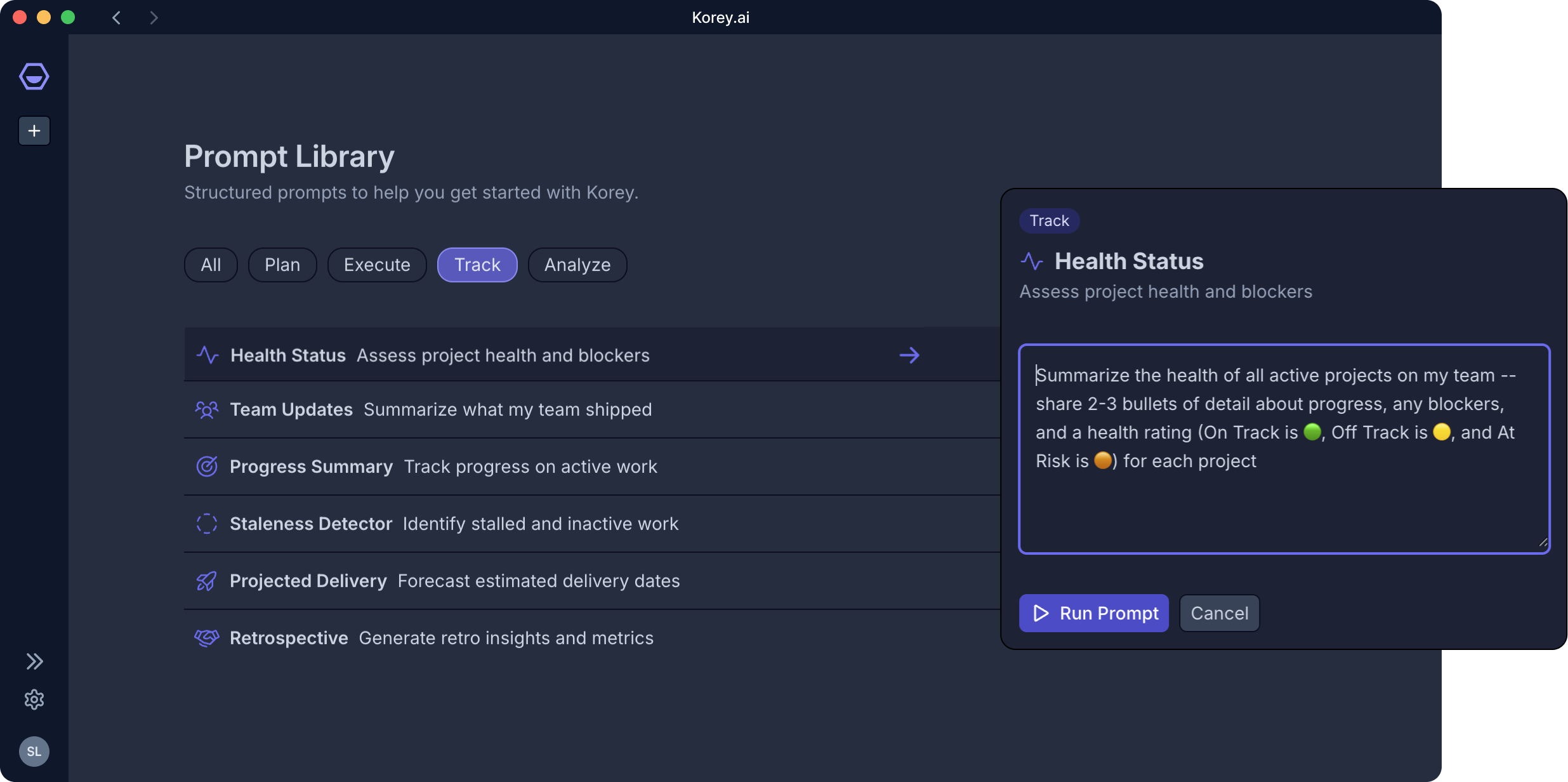
Chat and prompts

The prompt library provides structured entry points to help users discover what Korey can do. I organized prompts around key use cases and outcomes, giving users a starting point without constraining them.

Korey prompt library interface with structured prompts for planning, execution, and analysis.

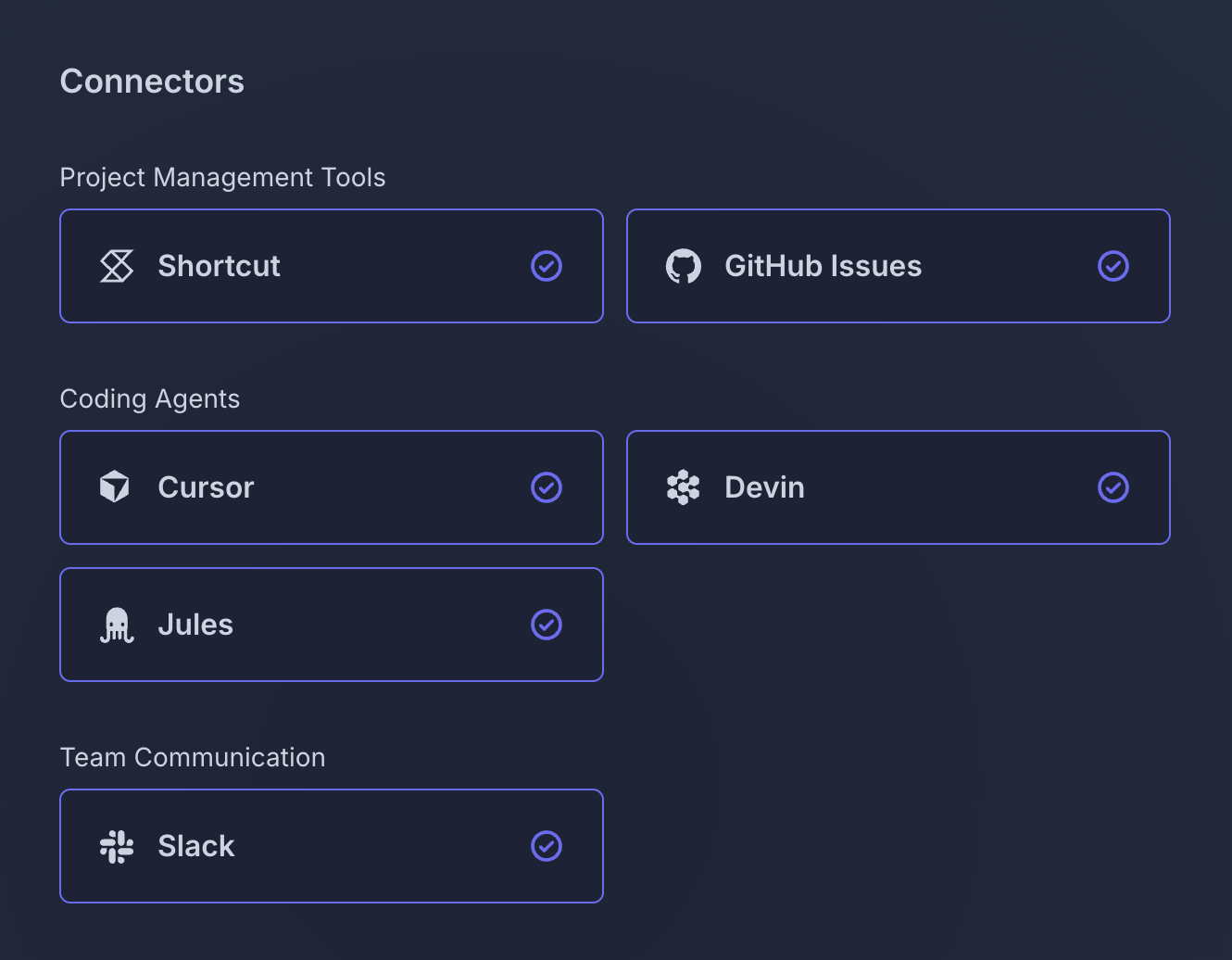
Connectors

I designed an adaptable foundation for connecting Korey to external tools, built to scale as new integrations are added without requiring the core experience to change.

Korey connectors screen showing connected project management, coding agent, and communication tools.

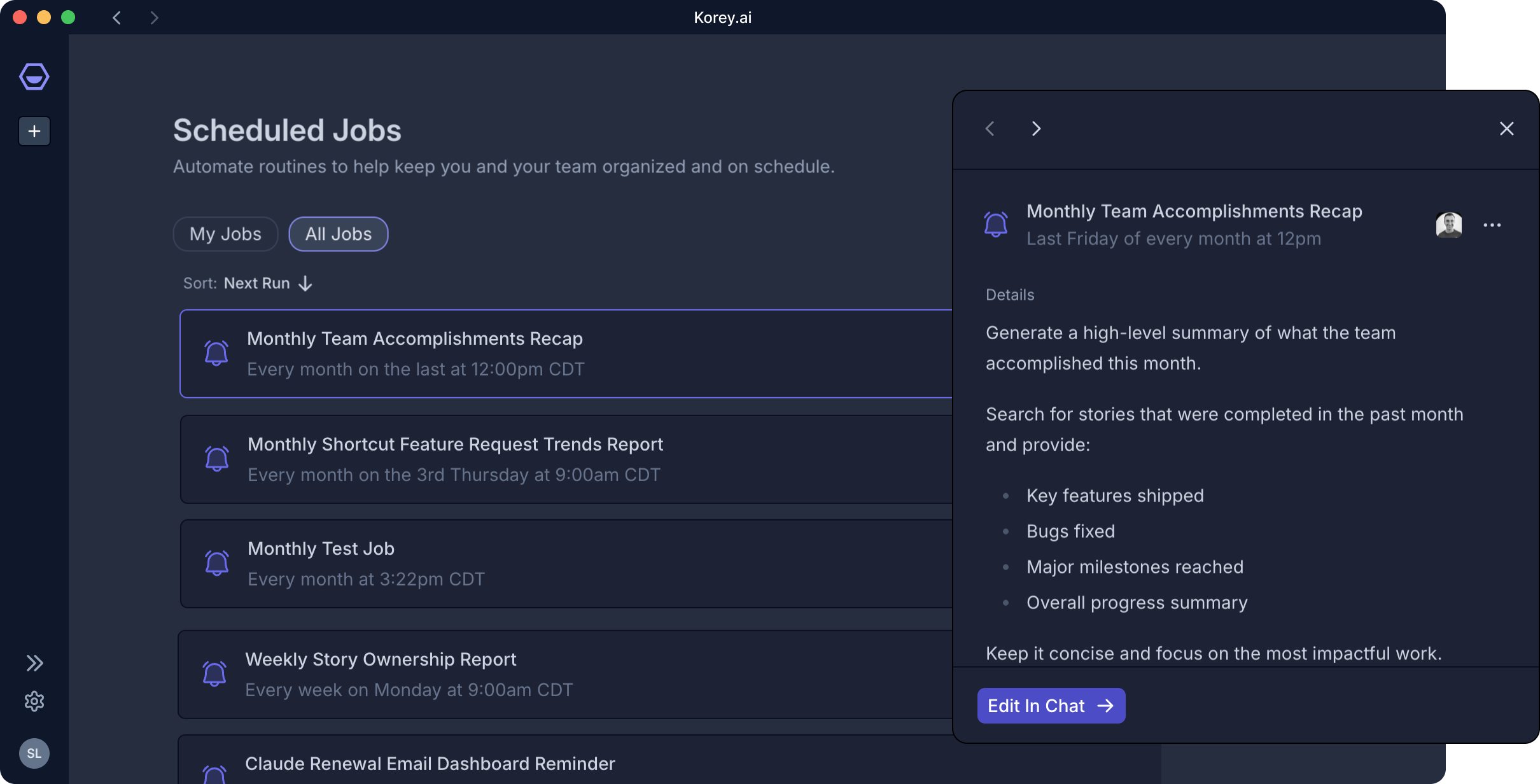
Scheduled jobs

Recurring tasks extend Korey beyond live prompts, positioning it as an active system that supports team routines over time, not just a reactive tool.

Korey scheduled jobs view showing recurring routines and job details over time.

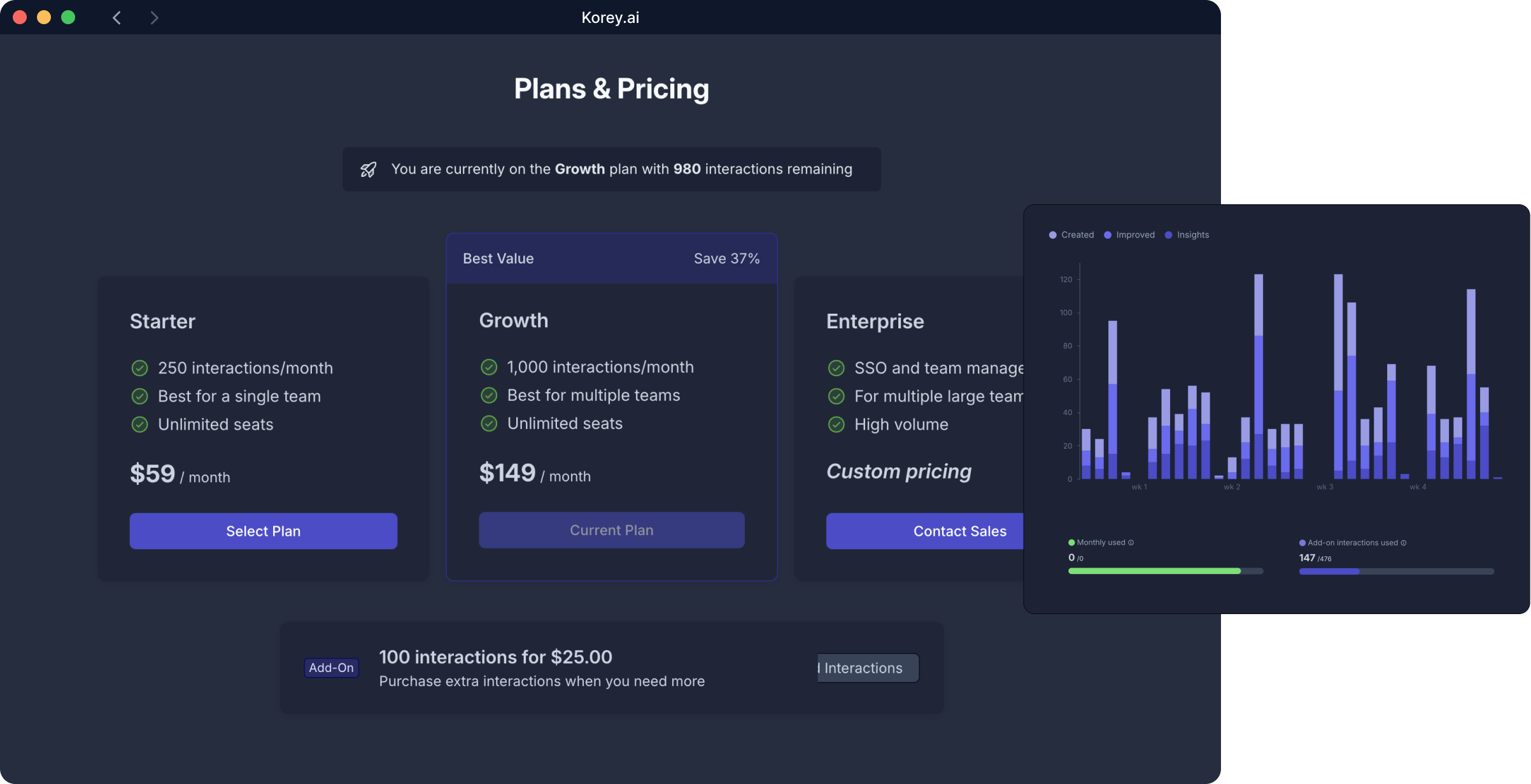
Billing

I designed the full billing surface, including the pricing page, plan selection, upgrade flows, usage metrics, interaction countdowns, and add-on interactions.

Korey billing view showing pricing, plan selection, and usage metrics.

Onboarding

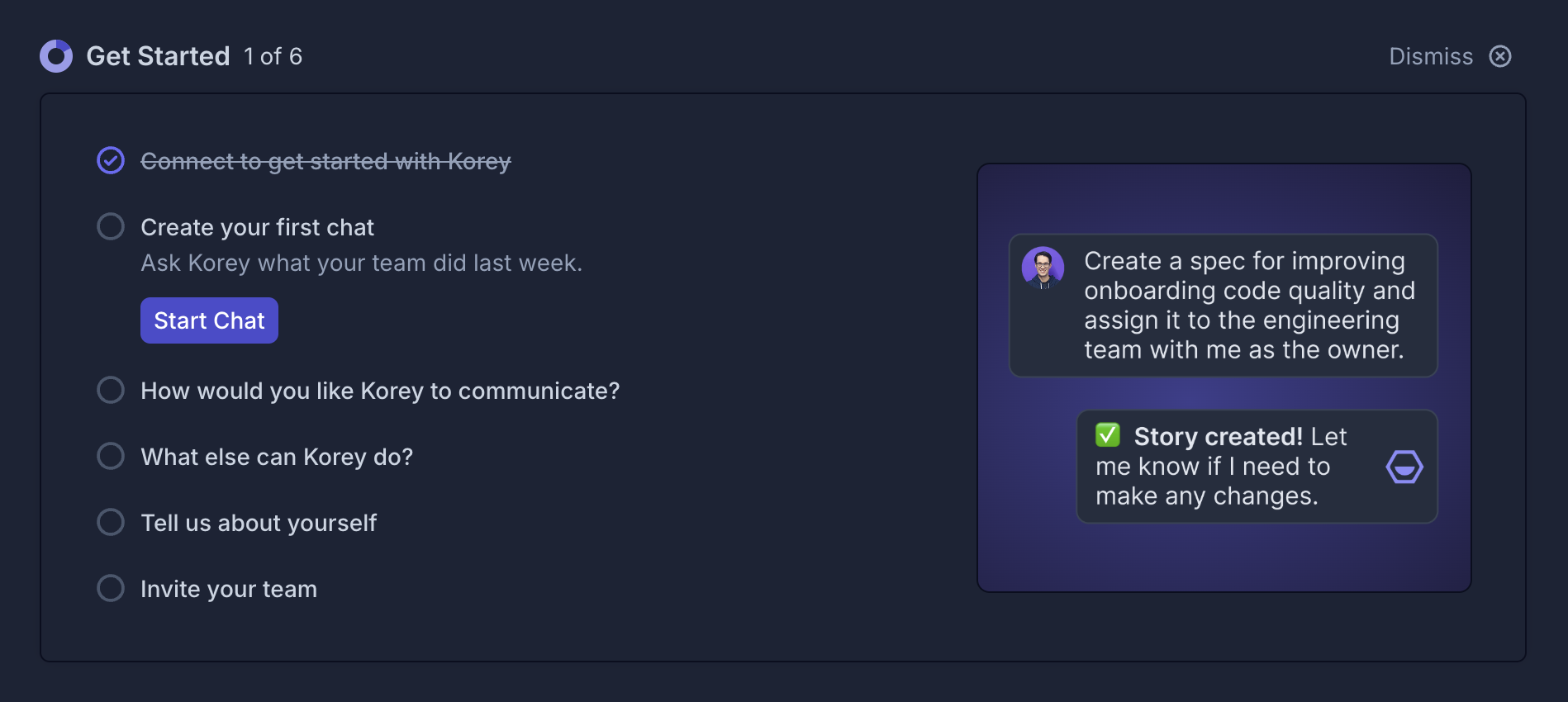
First-run experiences for AI tools are genuinely hard. I designed a forced-connection flow that gets users to their first meaningful interaction quickly, with starter prompts to reduce the blank-slate problem on day one.

Korey onboarding flow showing the first step of connecting tools to get started.

Designing in Code

I've always enjoyed designing in the code, but over the past year I've shifted more and more of my design work directly into ai-powered prototyping, using a variety of agents and IDEs to build fully fleshed out and interactive solutions in code. Part of it is research: I'm designing an AI tool, so using them deeply informs my thinking. Mostly it's just faster and more real.

The biggest unlock was building an internal prototype app. External tools need too much context and in-app PRs are often impractical as a design artifact. So I built a lightweight environment that pulls in our actual styles, tracks deviations against the main product, and surfaces prototypes with status that can be shared for review and handoff.
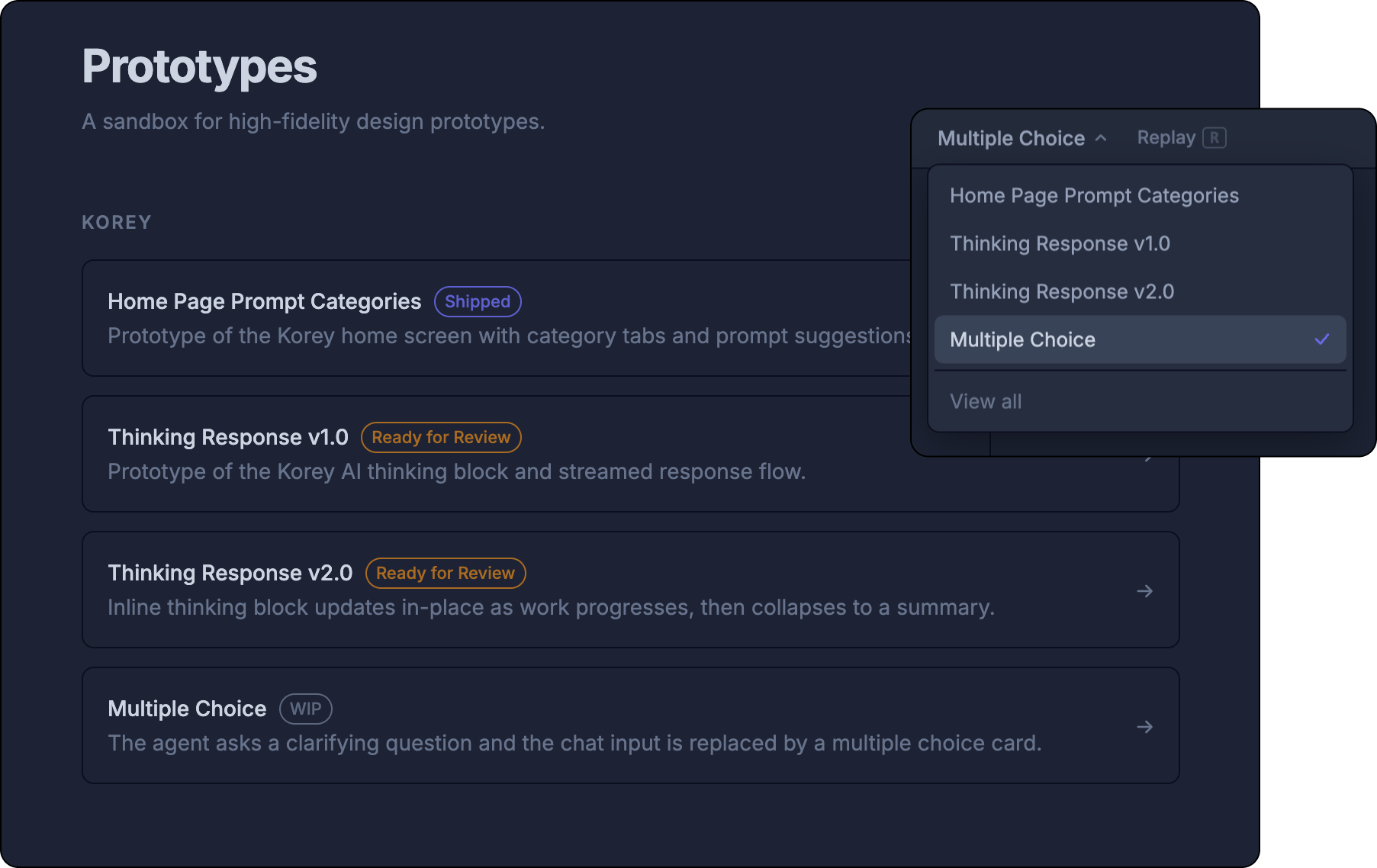
Internal prototype app used to explore Korey concepts in code with status tracking and design review context.

Outcome

Korey is a product I've helped build from nothing, in a category that didn't exist a few years ago, with constraints and ambiguity at every turn.

It's sharpened my instincts for designing in uncertainty, evaluating tradeoffs quickly, and building systems that have to work in the real world, not just in a prototype.

The work is ongoing. New features ship regularly and the product continues to evolve.